

Current collected state Current
Observed since 21 Oct, 09:56 UTC
No superseded metadata states collected. Unchanged observations do not create new revisions.
Chemical and Pharmaceutical Autoencoder - Providing reproducible modelling for quantum chemistry

I prototyped novel and good algorithms for chemistry in 2021 and it took me two years to get them publication ready. Of course I did other stuff like thesis, work, exams etc. However, the development time was far too long.
The focus is on making algorithms and sparing out the rest
Thus the focus is on an easy interface for investigation. PytorchGeometric gives a good guideline on how to do this. It is more though, and also about producing plots to score the overall algorithm.
aiarc is aimed to improve rapid prototyping of AI algorithms on graphs (timeseries, molecules, networks etc) for building novel simulation applications fast and at scale.
The package shall provide production grade algorithms in an automated way but with user interaction.
The lessons I learned from other projects were
Work on a project base -> provide a framework to start a project A project needs differnt things
I am having some years of experience now, trying to model in an regulatory environment such as drug design, risk assessement, health care and chemistry.
Packages I have built in that context are
An architectural pattern became prevalent such that I found it in torchsr, too (which had mutiple years of development, too)
Now, with aiarc we aim to get modelling to the next stage.


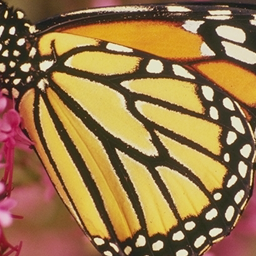
Super-resolution is a process that increases the resolution of an image, adding additional details. Methods using neural networks give the most accurate results, much better than other interpolation methods. With the right training, it is even possible to make photo-realistic images.
For example, here is a low-resolution image, magnified x4 by a neural network, and a high resolution image of the same object:


In this repository, you will find:
The following pretrained models are available. Click on the links for the paper:
Newer and larger models perform better: the most accurate models are EDSR (huge), RCAN and NinaSR-B2. For practical applications, I recommend a smaller model, such as NinaSR-B1.
| Network | Parameters (M) | 2x (PSNR/SSIM) | 3x (PSNR/SSIM) | 4x (PSNR/SSIM) |
|---|---|---|---|---|
| carn | 1.59 | 37.88 / 0.9600 | 34.32 / 0.9265 | 32.14 / 0.8942 |
| carn_m | 0.41 | 37.68 / 0.9594 | 34.06 / 0.9247 | 31.88 / 0.8907 |
| edsr_baseline | 1.37 | 37.98 / 0.9604 | 34.37 / 0.9270 | 32.09 / 0.8936 |
| edsr | 40.7 | 38.19 / 0.9609 | 34.68 / 0.9293 | 32.48 / 0.8985 |
| ninasr_b0 | 0.10 | 37.72 / 0.9594 | 33.96 / 0.9234 | 31.77 / 0.8877 |
| ninasr_b1 | 1.02 | 38.14 / 0.9609 | 34.48 / 0.9277 | 32.28 / 0.8955 |
| ninasr_b2 | 10.0 | 38.21 / 0.9612 | 34.61 / 0.9288 | 32.45 / 0.8973 |
| rcan | 15.4 | 38.27 / 0.9614 | 34.76 / 0.9299 | 32.64 / 0.9000 |
| rdn | 22.1 | 38.12 / 0.9609 | 33.98 / 0.9234 | 32.35 / 0.8968 |
| Network | Parameters (M) | 2x (PSNR/SSIM) | 3x (PSNR/SSIM) | 4x (PSNR/SSIM) |
|---|---|---|---|---|
| carn | 1.59 | 33.57 / 0.9173 | 30.30 / 0.8412 | 28.61 / 0.7806 |
| carn_m | 0.41 | 33.30 / 0.9151 | 30.10 / 0.8374 | 28.42 / 0.7764 |
| edsr_baseline | 1.37 | 33.57 / 0.9174 | 30.28 / 0.8414 | 28.58 / 0.7804 |
| edsr | 40.7 | 33.95 / 0.9201 | 30.53 / 0.8464 | 28.81 / 0.7872 |
| ninasr_b0 | 0.10 | 33.24 / 0.9144 | 30.02 / 0.8355 | 28.28 / 0.7727 |
| ninasr_b1 | 1.02 | 33.71 / 0.9189 | 30.41 / 0.8437 | 28.71 / 0.7840 |
| ninasr_b2 | 10.0 | 34.00 / 0.9206 | 30.53 / 0.8461 | 28.80 / 0.7863 |
| rcan | 15.4 | 34.13 / 0.9216 | 30.63 / 0.8475 | 28.85 / 0.7878 |
| rdn | 22.1 | 33.71 / 0.9182 | 30.07 / 0.8373 | 28.72 / 0.7846 |
| Network | Parameters (M) | 2x (PSNR/SSIM) | 3x (PSNR/SSIM) | 4x (PSNR/SSIM) | 8x (PSNR/SSIM) |
|---|---|---|---|---|---|
| carn | 1.59 | 36.08 / 0.9451 | 32.37 / 0.8871 | 30.43 / 0.8366 | N/A |
| carn_m | 0.41 | 35.76 / 0.9429 | 32.09 / 0.8827 | 30.18 / 0.8313 | N/A |
| edsr_baseline | 1.37 | 36.13 / 0.9455 | 32.41 / 0.8878 | 30.43 / 0.8370 | N/A |
| edsr | 40.7 | 36.56 / 0.9485 | 32.75 / 0.8933 | 30.73 / 0.8445 | N/A |
| ninasr_b0 | 0.10 | 35.77 / 0.9428 | 32.06 / 0.8818 | 30.09 / 0.8293 | 26.60 / 0.7084 |
| ninasr_b1 | 1.02 | 36.35 / 0.9471 | 32.51 / 0.8892 | 30.56 / 0.8405 | 26.96 / 0.7207 |
| ninasr_b2 | 10.0 | 36.52 / 0.9482 | 32.73 / 0.8926 | 30.73 / 0.8437 | 27.07 / 0.7246 |
| rcan | 15.4 | 36.61 / 0.9489 | 32.78 / 0.8935 | 30.73 / 0.8447 | 27.17 / 0.7292 |
| rdn | 22.1 | 36.32 / 0.9468 | 32.04 / 0.8822 | 30.61 / 0.8414 | N/A |
| Network | Parameters (M) | 2x (PSNR/SSIM) | 3x (PSNR/SSIM) | 4x (PSNR/SSIM) |
|---|---|---|---|---|
| carn | 1.59 | 32.12 / 0.8986 | 29.07 / 0.8042 | 27.58 / 0.7355 |
| carn_m | 0.41 | 31.97 / 0.8971 | 28.94 / 0.8010 | 27.45 / 0.7312 |
| edsr_baseline | 1.37 | 32.15 / 0.8993 | 29.08 / 0.8051 | 27.56 / 0.7354 |
| edsr | 40.7 | 32.35 / 0.9019 | 29.26 / 0.8096 | 27.72 / 0.7419 |
| ninasr_b0 | 0.10 | 31.97 / 0.8974 | 28.90 / 0.8000 | 27.36 / 0.7290 |
| ninasr_b1 | 1.02 | 32.24 / 0.9004 | 29.13 / 0.8061 | 27.62 / 0.7377 |
| ninasr_b2 | 10.0 | 32.32 / 0.9014 | 29.23 / 0.8087 | 27.71 / 0.7407 |
| rcan | 15.4 | 32.39 / 0.9024 | 29.30 / 0.8106 | 27.74 / 0.7429 |
| rdn | 22.1 | 32.25 / 0.9006 | 28.90 / 0.8004 | 27.66 / 0.7388 |
| Network | Parameters (M) | 2x (PSNR/SSIM) | 3x (PSNR/SSIM) | 4x (PSNR/SSIM) |
|---|---|---|---|---|
| carn | 1.59 | 31.95 / 0.9263 | 28.07 / 0.849 | 26.07 / 0.78349 |
| carn_m | 0.41 | 31.30 / 0.9200 | 27.57 / 0.839 | 25.64 / 0.76961 |
| edsr_baseline | 1.37 | 31.98 / 0.9271 | 28.15 / 0.852 | 26.03 / 0.78424 |
| edsr | 40.7 | 32.97 / 0.9358 | 28.81 / 0.865 | 26.65 / 0.80328 |
| ninasr_b0 | 0.10 | 31.33 / 0.9204 | 27.48 / 0.8374 | 25.45 / 0.7645 |
| ninasr_b1 | 1.02 | 32.48 / 0.9319 | 28.29 / 0.8555 | 26.25 / 0.7914 |
| ninasr_b2 | 10.0 | 32.91 / 0.9354 | 28.70 / 0.8640 | 26.54 / 0.8008 |
| rcan | 15.4 | 33.19 / 0.9372 | 29.01 / 0.868 | 26.75 / 0.80624 |
| rdn | 22.1 | 32.41 / 0.9310 | 27.49 / 0.838 | 26.36 / 0.79460 |
All models are defined in torchsr.models. Other useful tools to augment your models, such as self-ensemble methods and tiling, are present in torchsr.models.utils.
The following datasets are available. Click on the links for the project page:
All datasets are defined in torchsr.datasets. They return a list of images, with the high-resolution image followed by downscaled or degraded versions.
Data augmentation methods are provided in torchsr.transforms.
Datasets are downloaded automatically when using the download=True flag, or by running the corresponding script i.e. ./scripts/download_div2k.sh.
from torchsr.datasets import Div2K
from torchsr.models import ninasr_b0
from torchvision.transforms.functional import to_pil_image, to_tensor

# Div2K dataset
dataset = Div2K(root="./data", scale=2, download=False)

# Get the first image in the dataset (High-Res and Low-Res)
hr, lr = dataset[0]

# Download a pretrained NinaSR model
model = ninasr_b0(scale=2, pretrained=True)

# Run the Super-Resolution model
lr_t = to_tensor(lr).unsqueeze(0)
sr_t = model(lr_t)
sr = to_pil_image(sr_t.squeeze(0))
sr.show()
from torchsr.datasets import Div2K
from torchsr.models import edsr, rcan
from torchsr.models.utils import ChoppedModel, SelfEnsembleModel
from torchsr.transforms import ColorJitter, Compose, RandomCrop

# Div2K dataset, cropped to 256px, width color jitter
dataset = Div2K(
    root="./data", scale=2, download=False,
    transform=Compose([
        RandomCrop(256, scales=[1, 2]),
        ColorJitter(brightness=0.2)
    ]))

# Pretrained RCAN model, with tiling for large images
model = ChoppedModel(
    rcan(scale=2, pretrained=True), scale=2,
    chop_size=400, chop_overlap=10)

# Pretrained EDSR model, with self-ensemble method for higher quality
model = SelfEnsembleModel(edsr(scale=2, pretrained=True))
A script is available to train the models from scratch, evaluate them, and much more. It is not part of the pip package, and requires additional dependencies. More examples are available in scripts/.
pip install piq tqdm tensorboard  # Additional dependencies
python -m torchsr.train -h
python -m torchsr.train --arch edsr_baseline --scale 2 --download-pretrained --images test/butterfly.png --destination results/
python -m torchsr.train --arch edsr_baseline --scale 2 --download-pretrained --validation-only
python -m torchsr.train --arch edsr_baseline --scale 2 --epochs 300 --loss l1 --dataset-train div2k_bicubic
You can evaluate models from the command line as well. For example, for EDSR with the paper's PSNR evaluation:
python -m torchsr.train --validation-only --arch edsr_baseline --scale 2 --dataset-val set5 --chop-size 400 --download-pretrained --shave-border 2 --eval-luminance
Thanks to the people behind torchvision and EDSR, whose work inspired this repository. Some of the models available here come from EDSR-PyTorch and CARN-PyTorch.
To cite this work, please use:
@misc{torchsr,
  author = {Gabriel Gouvine},
  title = {Super-Resolution Networks for Pytorch},
  year = {2021},
  publisher = {GitHub},
  journal = {GitHub repository},
  howpublished = {\url{https://github.com/Coloquinte/torchSR}},
  doi = {10.5281/zenodo.4868308}
}

@misc{ninasr,
  author = {Gabriel Gouvine},
  title = {NinaSR: Efficient Small and Large ConvNets for Super-Resolution},
  year = {2021},
  publisher = {GitHub},
  journal = {GitHub repository},
  howpublished = {\url{https://github.com/Coloquinte/torchSR/blob/main/doc/NinaSR.md}},
  doi = {10.5281/zenodo.4868308}
}
Download counts and popularity will appear here as the collector receives them.
| Version | Published | Direct dependencies | Open version |
|---|---|---|---|
| 0.0.2 | 21 Oct 2023 | 10 |
This describes our collected data; it is not a security assessment.
Observed since 21 Oct, 09:56 UTC
No superseded metadata states collected. Unchanged observations do not create new revisions.
package:61bc07890795a602d585dc31c866b94ea2b43dd43c0af8c1ec1e705523d6a922